
social media website focused on books
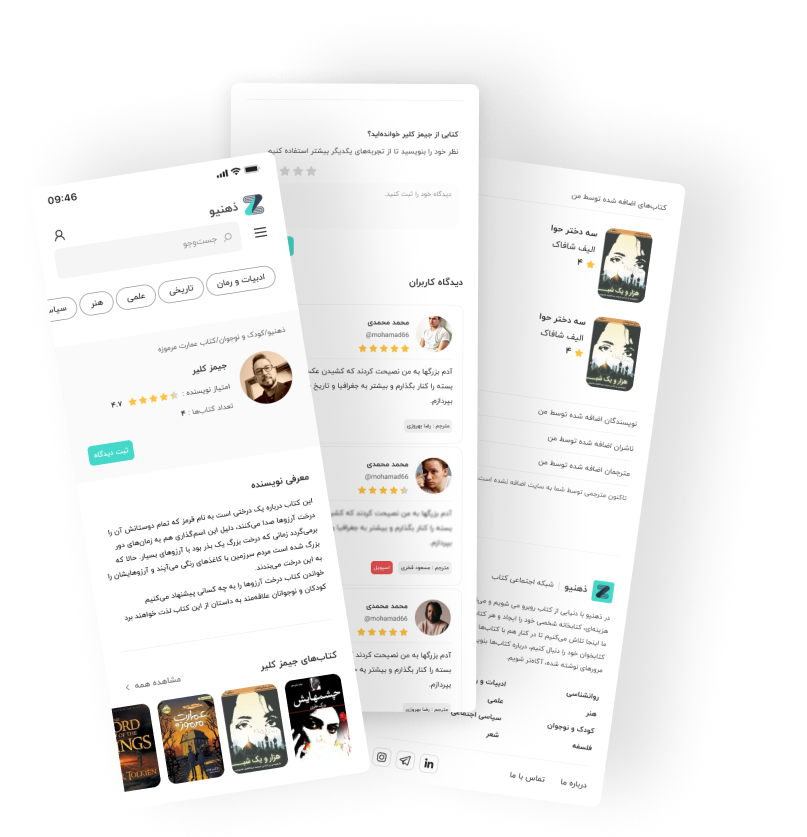
Zehnio is a social media website focused on books, where users can discover and discuss different titles. They can share their thoughts through ratings and comments, add books to their personal library, and keep track of their reading journey. The platform also offers personalized book suggestions to help users find new books that match their interests.
1. Users found it hard to discover the best translators and publishers for the books they liked.
2. There wasn’t a good way for users to keep track of the books they’ve read, want to read, and their favorites all in one place.
3. Readers didn’t have a central spot to read and share comments with other book lovers, making it tough to decide on what to read.
4. Finding new books that matched users’ interests was difficult, making it hard to explore new reading options.
Zehnio solves these problems by offering a personalized onboarding experience that helps tailor book recommendations based on users’ favorite categories and books. Users can manage their reading lists through a personal library feature and use the rating and comment system to choose the best publishers and translators, making their reading experience more informed and enjoyable.

Most users do not know what their problem is, so a good test is needed to determine their problems.
The research began with a survey to understand user interests, needs, and preferences, aiming to validate co-founders’ ideas and ensure alignment with the intended direction.
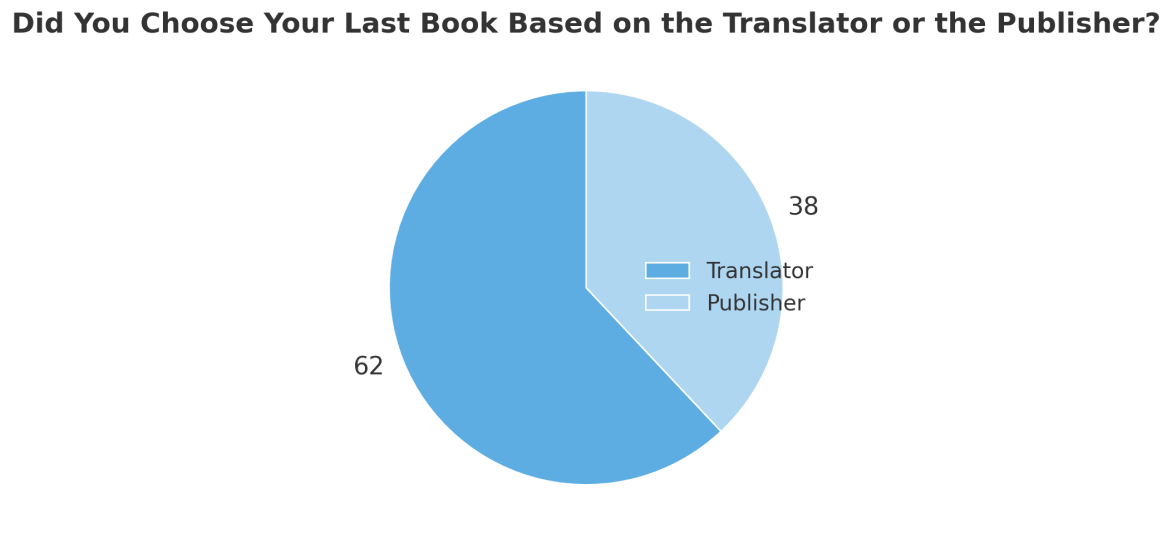
-In conclusion, for 62% of book readers, the translator plays a more crucial role in their decision-making process than the publisher. This indicates that readers place significant value on the quality and style of translation, viewing it as a key factor in their overall reading experience.
-The most popular book genres among readers are romance and literature, followed by psychology, history, and science.
-When selecting a book in their preferred genre, readers prefer to first read reviews from other readers, followed by exploring the book’s summary before making a decision.
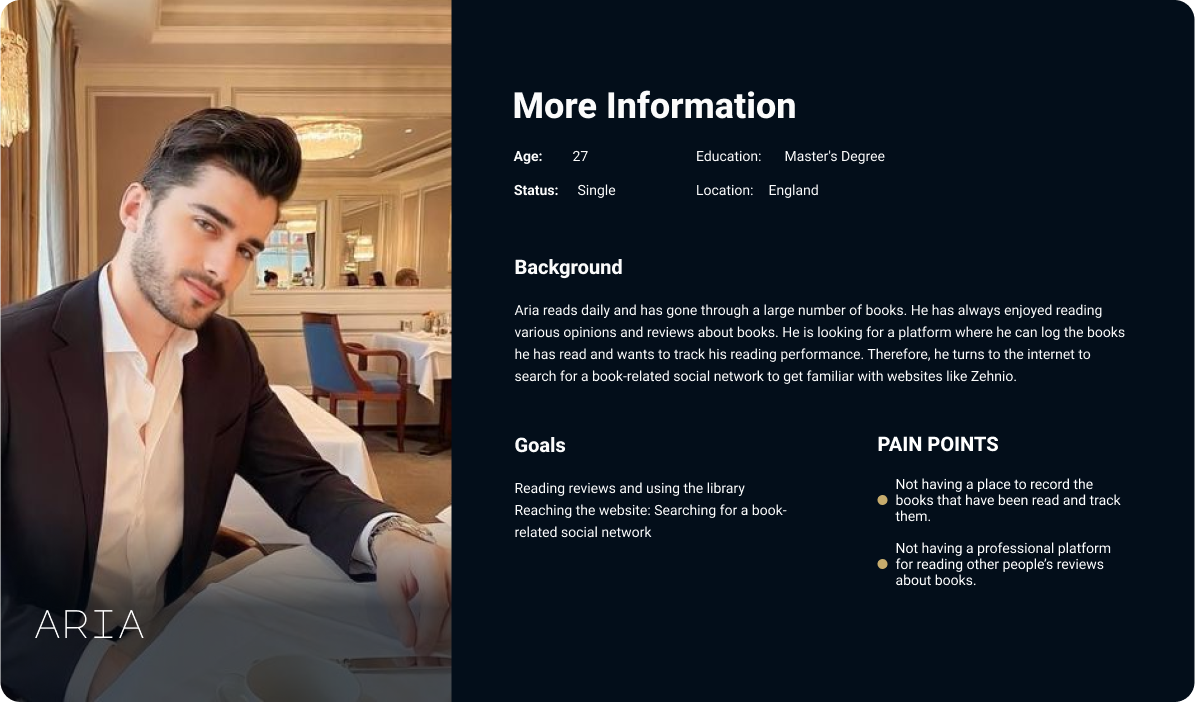
After the survey, I finalized the customer profile and summarized it in a persona canvas. While this initial customer map is a solid starting point, it’s crucial to view the customer profile as a dynamic document that should be continuously updated with new insights from ongoing user research and testing.
Aria:
Aria reads daily and has gone through a large number of books. He has always enjoyed reading various opinions and reviews about books. He is looking for a platform where he can log the books he has read and wants to track his reading performance. Therefore, he turns to the internet to search for a book-related social network to get familiar with websites like Zehnio.
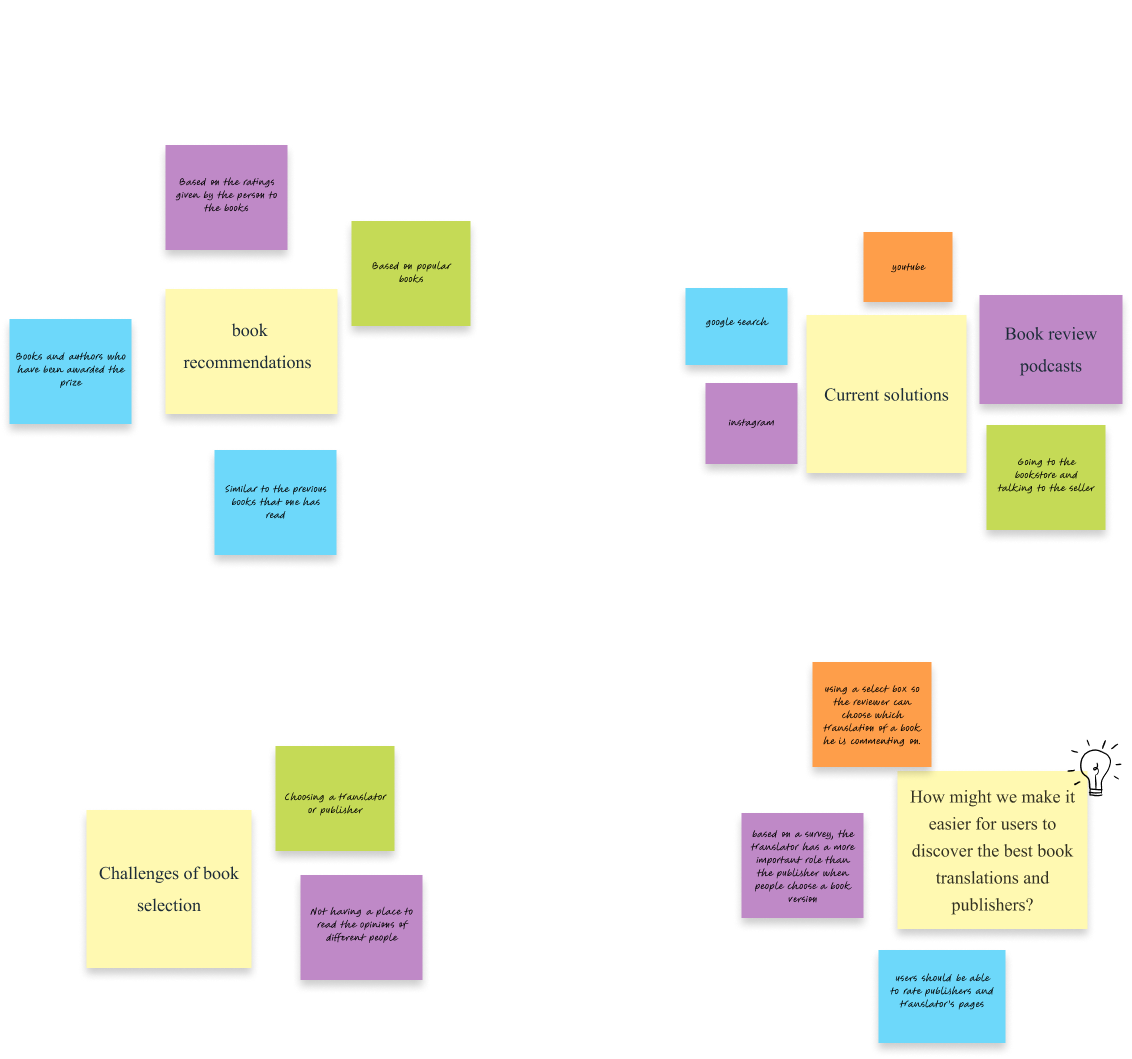
Leveraging the insights gained from my research, I formulated “How Might We” statements to convey the most significant issues and prioritize them effectively to have the most significant impact.
1. How might we make it easier for users to discover the best book translations and publishers?
2. How might we help readers find personalized book recommendations based on their reading habits and preferences?
3. How might we create a space for users to engage with book reviews and share insights with fellow readers?
4. How might we improve the user experience for organizing and tracking personal book collections and reading goals?
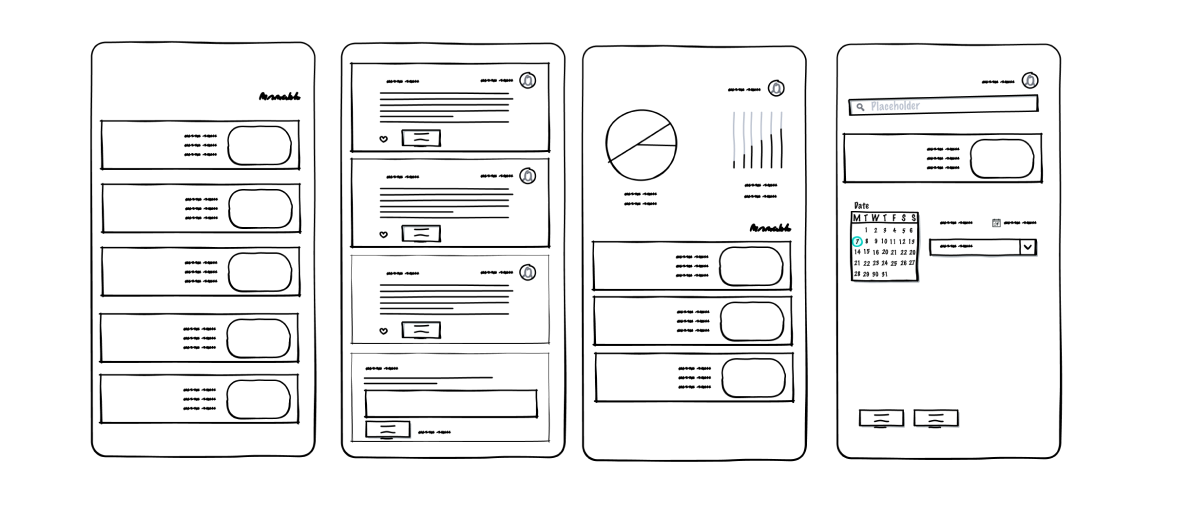
With the “How Might We” statements as a foundation, I proceeded to brainstorm potential solutions to address the identified issues. Drawing from the research synthesis, I began sketching ideas and conceptualizing approaches to tackle users’ problems.
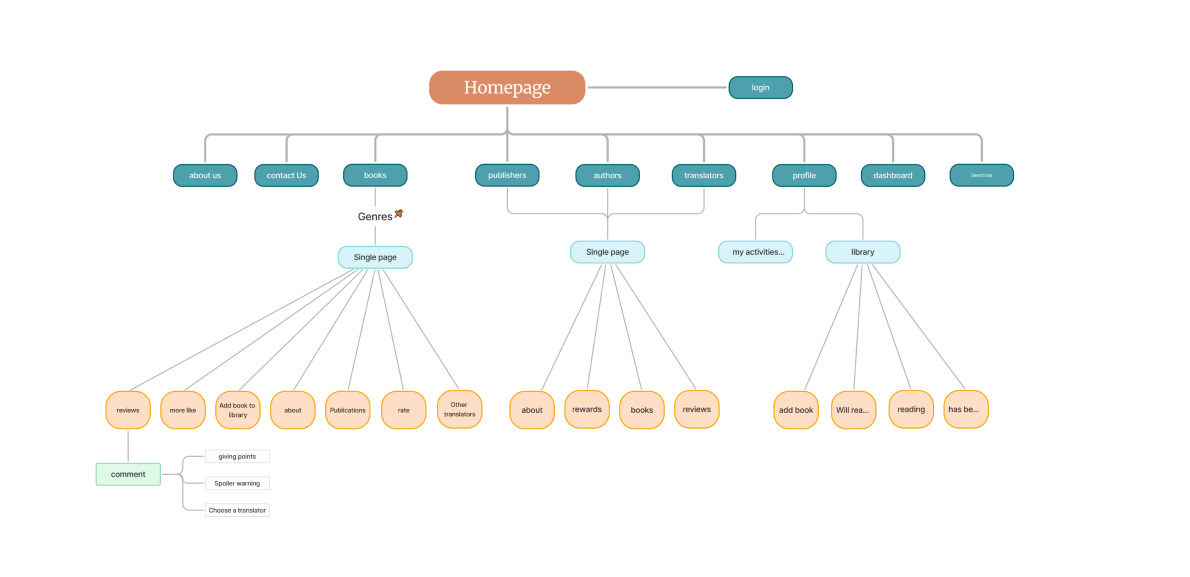
Building my sitemap was a pivotal step to understand how to articulate my platform. One thing was clear at this stage: “book reviews and rates” will have been the main focus of the platform.
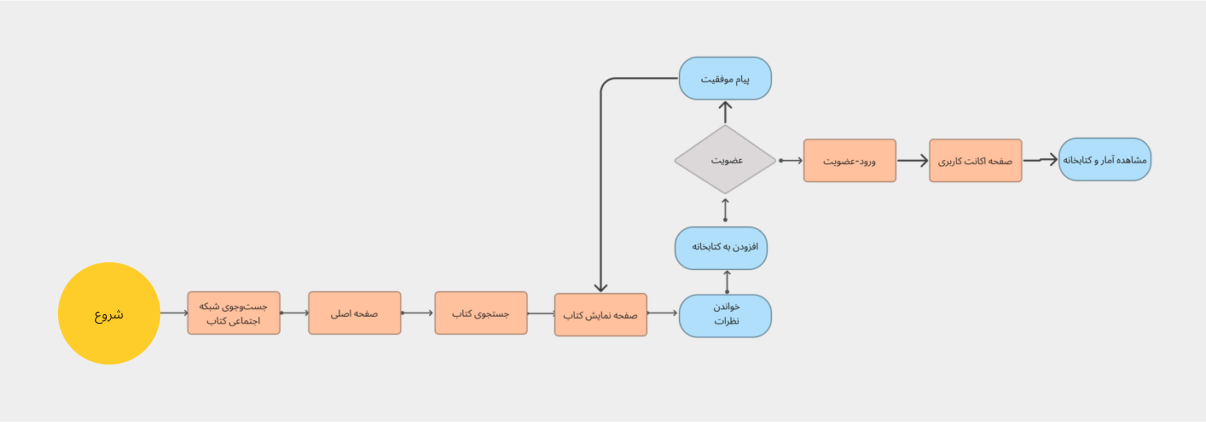
I’ve created user flows for the entire website. It was crucial to turn all my work into pages, buttons, inputs and links. After creating user flows, I’ve decided to develop in depth a task flow that I’ve eventually tested with my prototype: read reviews and add book to the library.
I created some rapid wireframes (not so rapid) to effectively illustrate the proposed product design to the client and validate the user experience through comprehensive usability testing. This critical process ensured the alignment of our design concept with the client’s expectations and the usability of the product for end-users. By conducting usability testing at an early stage, we were able to anticipate and address any potential challenges, thereby enhancing the functionality and usability of the product.
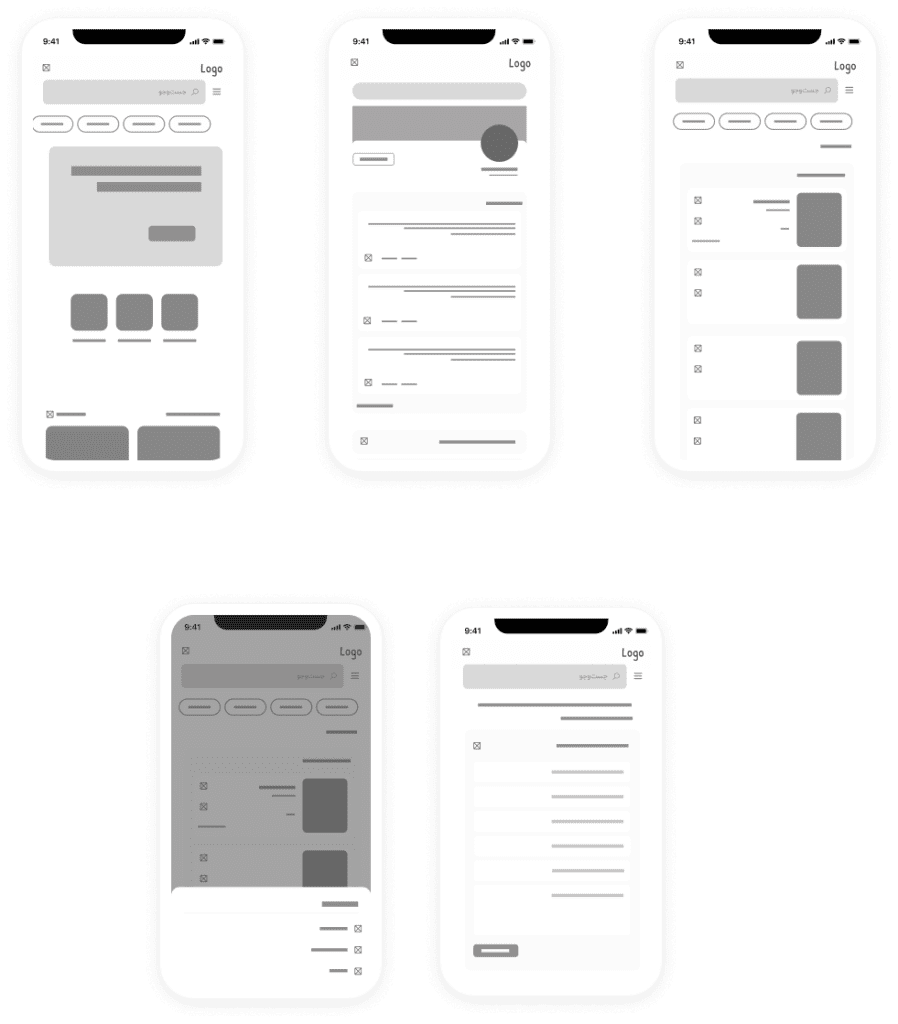
I created some rapid wireframes (not so rapid) to effectively illustrate the proposed product design to the client and validate the user experience through comprehensive usability testing. This critical process ensured the alignment of our design concept with the client’s expectations and the usability of the product for end-users. By conducting usability testing at an early stage, we were able to anticipate and address any potential challenges, thereby enhancing the functionality and usability of the product.